Rewiring the Mind
The Gut-Brain Axis and Neuroplasticity
In our debut episode, Dr. Whitney and Alex explore the fascinating superhighway connecting your gut and brain. Learn how 90% of your serotonin is produced in your digestive tract, which brain-boosting foods support neuroplasticity, and how mindfulness can literally rewire your neural pathways.
Episode 1: Rewiring the Mind
The Gut-Brain Axis and Neuroplasticity
Full Transcript
Welcome to Rewire & Replenish, the podcast where we explore the fascinating intersection of neuroscience, holistic nutrition, and mental wellness. I'm your co-host, Alex, and as always, I'm joined by the brilliant Dr. Whitney. How are you doing today, Dr. Whitney?
I'm doing wonderfully, Alex! I've got my matcha green tea, my brain is fueled up, and I am so excited to dive into today's topic. It's one of my absolute favorites.
I can tell! Today, we are talking about something that sounds like a sci-fi concept but is actually happening inside all of us right now: the gut-brain axis and neuroplasticity. Dr. Whitney, for our listeners who might be hearing these terms for the first time, can you break down what the gut-brain axis actually is?
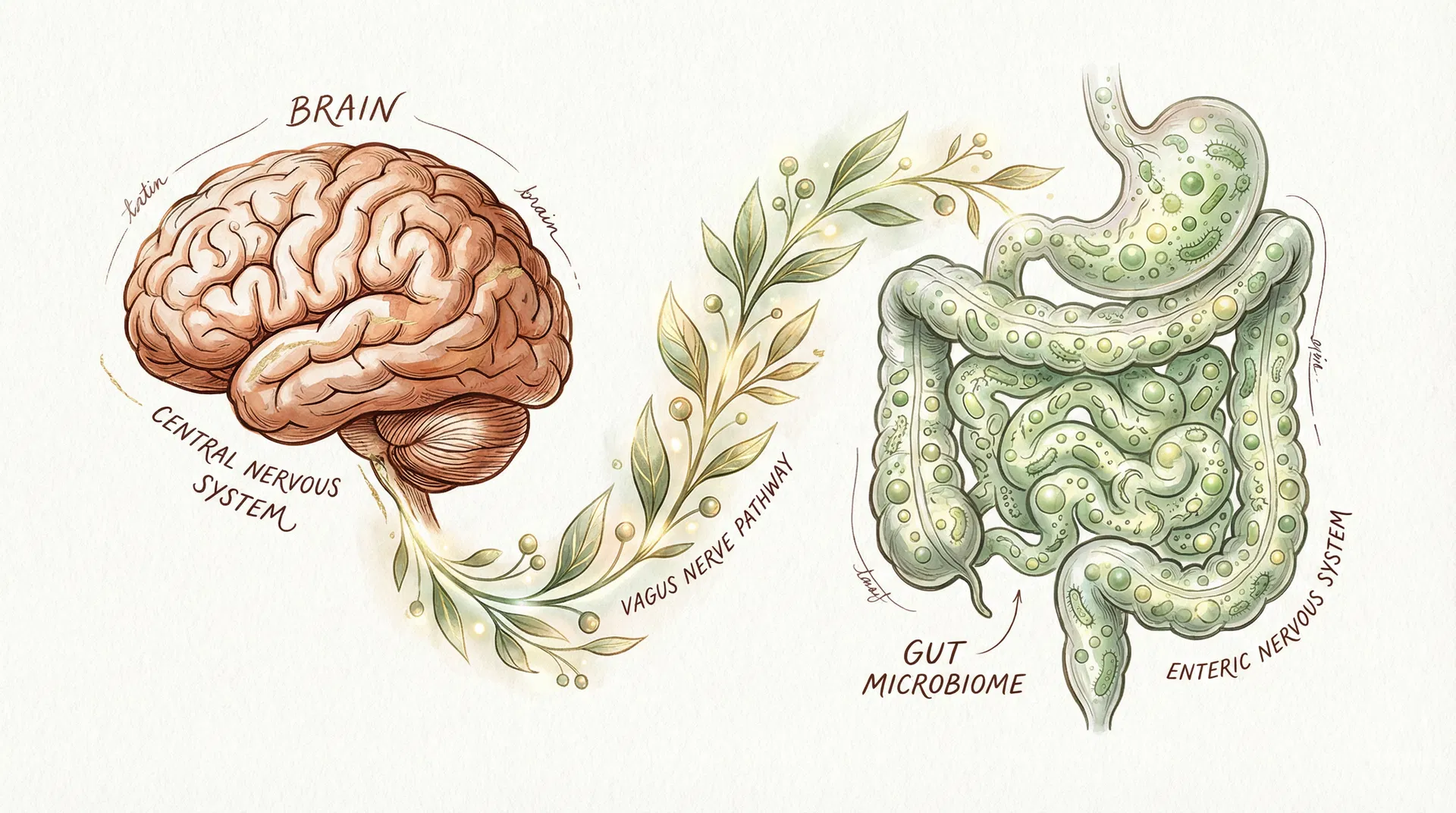
Absolutely. Think of the gut-brain axis as a superhighway of communication between your digestive system and your brain. For a long time, science treated the brain and the body as completely separate entities. But we now know they are intimately connected. Your gut and your brain are constantly talking to each other through neural, hormonal, and immune pathways. In fact, the vagus nerve is like the main fiber-optic cable connecting the two.
So, when people say they have a "gut feeling" about something, that's not just a metaphor?
Exactly! It's literal biology. Your gut produces a massive amount of neurotransmitters. For example, an estimated 90% of your body's serotonin — the "happy chemical" that regulates mood, sleep, and appetite — is actually produced in your digestive tract, not your brain. So, if your gut is inflamed or unbalanced because of poor nutrition or chronic stress, your mood and cognitive function are going to take a direct hit.
That is wild. So, what we eat literally dictates how we feel and how we think. Which brings us to the "Replenish" part of our podcast name. What should we be putting on our plates to support this superhighway?
Great question. To support the gut-brain axis, we need to focus on holistic nutrition that reduces inflammation and feeds our beneficial gut bacteria. Omega-3 fatty acids are crucial — they are the literal building blocks of brain cells. You can find them in wild-caught salmon, walnuts, and chia seeds. We also want to load up on antioxidants from leafy greens and berries to protect the brain from oxidative stress. And of course, fermented foods like kimchi, sauerkraut, and kefir are fantastic for introducing good bacteria into the gut microbiome.
Okay, so salmon, spinach, and some sauerkraut. I can do that. But let's pivot slightly to the other big word of the day: neuroplasticity. How does what we eat tie into our brain's ability to change?
Neuroplasticity is the brain's incredible ability to reorganize itself by forming new neural connections throughout life. It's how we learn new skills, recover from injuries, and even break bad habits. And here is where the magic happens: the nutrients we absorb through our gut directly influence our brain's plasticity.
Wait, so eating the right foods actually helps my brain rewire itself?
Yes! When you consume a nutrient-dense diet, you are providing the brain with the raw materials it needs to build new pathways. On the flip side, a diet high in refined sugars and ultra-processed foods can actually impair brain function and reduce plasticity. But it's not just about food. Stress plays a massive role here, too.
Ah, stress. The ultimate villain. How does stress mess with this whole system?
When we are chronically stressed, our bodies produce high levels of cortisol. While cortisol is helpful in short bursts — like running away from a tiger — chronic high cortisol can actually damage the hippocampus, the part of the brain responsible for memory and learning. It also disrupts the gut microbiome, creating a vicious cycle. But the good news is that we can break this cycle through holistic habits.
What kind of habits are we talking about? Aside from eating our leafy greens, of course.
Mindfulness and meditation are incredibly powerful tools. Recent neuroscience research shows that engaging in regular mindfulness practices can actually induce neuroplasticity. It can increase the thickness of the cortex, reduce the reactivity of the amygdala — our brain's fear center — and improve overall brain connectivity. Even just seven days of meditation has been shown to improve brain efficiency and boost immune signaling.
That's amazing. So, by combining a brain-boosting diet with mindfulness practices, we are essentially giving our brains a massive upgrade.
Exactly. You are lowering cortisol, healing the gut, and giving your brain the environment it needs to grow and adapt. It's a holistic approach to mental wellness. You can't just treat the mind without treating the body, and vice versa.
I love that. It's so empowering to know that we have so much control over our cognitive health just through our daily choices. Dr. Whitney, before we wrap up, what is one actionable takeaway our listeners can start doing today to support their gut-brain axis?
I would say, start small. Add one brain-boosting food to your plate today — maybe a handful of blueberries or some walnuts. And pair that with just five minutes of deep, mindful breathing. Notice how your body feels. You are already taking the first steps to rewiring your mind.
Fantastic advice. Thank you, Dr. Whitney, and thank you to everyone listening. Be sure to subscribe to Rewire & Replenish for more deep dives into the science of holistic wellness. Until next time, feed your mind and trust your gut!